
There was a time when making money from an audience required access to traditional media. You needed a publishing company, a television network, a record label, or an established organization willing to distribute your work. The opportunity to reach thousands of people was largely controlled by those who owned the channels of communication.
The internet changed that relationship.
Suddenly, an individual with a website could publish information for the entire world. Bloggers became independent publishers, musicians began distributing their work directly, and entrepreneurs discovered that knowledge, creativity, and specialized skills could become the foundation of an online business.
Social media accelerated this transformation by giving ordinary people access to audiences that previously required significant financial resources to reach.
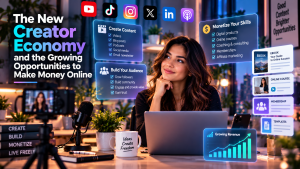
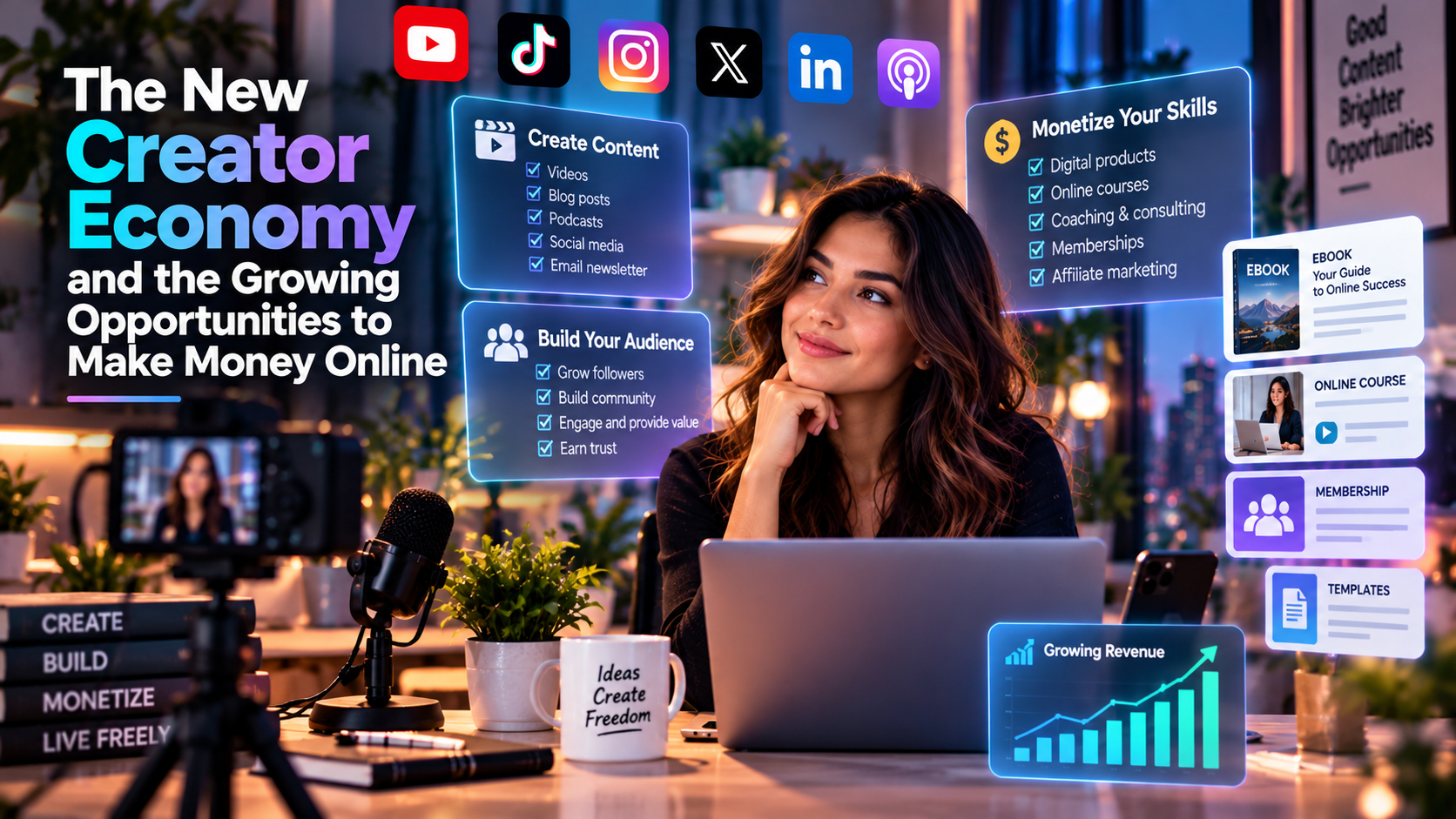
Today, we call this expanding digital marketplace the creator economy.
However, I believe the creator economy is entering a much more interesting phase. It is no longer defined exclusively by influencers promoting products or entertainers attracting millions of followers. It is increasingly becoming an environment where individuals can turn their knowledge, experience, and creativity into sustainable sources of income.
Artificial intelligence, digital publishing, online education, subscription platforms, and e-commerce are making that possibility more accessible than ever.
Throughout my career working with websites, digital marketing, and online businesses, I have always believed that the internet offers something extraordinary. It allows individuals to create economic opportunities without necessarily depending on traditional employment or large organizations.
The new creator economy is expanding that potential, but understanding how to make money online requires looking beyond followers, viral videos, and advertising revenue.
The real opportunity lies in building something valuable that people are willing to support.
How the Creator Economy Is Moving Beyond Social Media Influencers
When most people hear the term creator economy, they imagine someone producing videos for TikTok, Instagram, or YouTube. These platforms have certainly played an important role in the industry’s growth, but they represent only part of a much larger transformation.
A creator can be an author publishing digital books, a developer selling software, a consultant sharing professional knowledge, or an educator offering specialized courses. Even a small business owner producing useful information for customers participates in the creator economy.
What connects these activities is the ability to create something independently and distribute it through digital channels.
This distinction matters because it changes how we understand online income.
For years, social media success was often measured by the number of followers someone accumulated. A large audience could attract sponsorships, advertising opportunities, and brand partnerships.
But followers do not automatically translate into revenue.
An individual with hundreds of thousands of followers may struggle to generate consistent income, while someone with a much smaller audience can operate a profitable business by serving a specific need.
Consider a professional who teaches small businesses how to improve their accounting processes. Their audience may never become enormous, but the information they provide could be valuable enough for people to purchase training materials, subscribe to educational content, or hire them for consulting services.
The same principle applies to programmers, designers, writers, photographers, and professionals in almost every industry.
Specialized knowledge can become a product.
This is one of the reasons I believe the creator economy is becoming more closely connected to entrepreneurship.
Instead of relying exclusively on advertising revenue or sponsorship agreements, creators are developing their own products, services, and direct relationships with customers.
An author can sell books through online marketplaces and a personal website. A software developer can create a subscription-based application. A consultant can publish educational content that introduces potential clients to their expertise.
These business models existed before the current wave of artificial intelligence, but modern technology is making them easier to develop and manage.
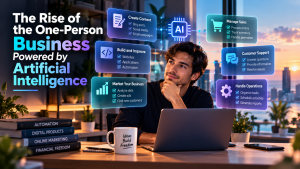
AI tools can assist with research, editing, design concepts, translation, customer communication, and content distribution. Automation can help creators manage repetitive tasks that previously consumed substantial time.
However, I would caution against assuming that AI-generated content automatically creates a business.
The internet is already filled with information. Producing more of it does not necessarily make someone valuable.
What matters is whether the content solves a problem, communicates an original perspective, or provides an experience people genuinely appreciate.
As creating digital material becomes easier, originality and credibility may become even more important.
Turning Knowledge and Creativity Into Online Income
One of the most interesting characteristics of the creator economy is that it allows people to monetize abilities they may already possess.
Someone who has spent years developing a professional skill often accumulates knowledge that others would find useful. The challenge is recognizing how to organize that knowledge into something people are willing to purchase.
Digital products offer several possibilities.
Books, educational courses, downloadable resources, software, templates, and specialized memberships can all become sources of income. Unlike physical products, many digital products can be distributed repeatedly without manufacturing another physical item for every sale.
That does not mean they are free to create or maintain. Producing something valuable requires time, expertise, marketing, customer support, and sometimes ongoing technical expenses.
But the economics can be attractive when the product addresses a genuine need.
I experienced this perspective while developing my own books, including Online Magic, where I share knowledge gained from working with websites and digital marketing.
Writing a book is not simply about putting words on pages. It involves organizing experience into something another person can understand and apply.

Once published, that knowledge becomes a product that can reach readers beyond my immediate professional network.
The same concept applies to countless other forms of expertise.
A photographer can create educational material about lighting and composition. A developer can sell specialized software. A marketing professional can develop training programs for businesses that want to manage their own campaigns.
What I find particularly valuable is the possibility of combining several income sources around one area of expertise.
An individual might publish free articles to attract readers, offer a paid digital product for those seeking deeper knowledge, and provide consulting services for customers who need personalized assistance.
Each element supports the others.
This is where digital marketing becomes essential.
Creating a product is only part of the process. People need to discover it, understand its value, and trust the person or business offering it.
Search engine optimization can attract visitors looking for relevant information. Social media can introduce ideas to new audiences. Email marketing can maintain relationships with interested readers. Paid advertising can help reach potential customers when the economics justify the investment.
These are not isolated techniques. They work best when connected through a clear strategy.
I have always believed that a website should be more than a digital business card. It should become an asset capable of communicating value and generating opportunities.
For creators, owning a website can be especially important because social media audiences exist on platforms controlled by other companies.
Algorithms change, accounts can be restricted, and organic reach can fluctuate. A creator who depends entirely on one platform accepts risks that may be difficult to control.
Developing a personal website, maintaining an email audience with appropriate consent, and building recognizable products can provide greater independence.
The objective is not to abandon social media. It is to use those platforms as part of a broader business rather than making them the entire business.
There is also an important distinction between passive income and scalable income.
Digital products are frequently promoted as opportunities to earn money while sleeping. In certain circumstances, they can generate sales without requiring direct participation in every transaction.
But building the audience, maintaining the product, supporting customers, and keeping information relevant still require work.
I prefer thinking about these opportunities as scalable rather than effortless.
Technology can reduce the amount of labor required for each additional sale, but it does not eliminate the responsibility of running a business.
Why the Future of Online Entrepreneurship Belongs to Independent Creators
As artificial intelligence becomes more capable, I expect the creator economy to expand beyond its current boundaries.
Individuals will be able to produce professional-quality materials with fewer resources, distribute content across multiple languages, and manage increasingly sophisticated digital businesses.
A person with specialized knowledge may be able to reach international customers without maintaining a traditional office or employing a large team.
This could create meaningful opportunities for people who previously lacked access to publishing, software development, or professional marketing resources.
However, greater accessibility also means greater competition.
When almost anyone can generate articles, images, videos, and digital products, simply producing content becomes less of a competitive advantage.
The value increasingly comes from understanding an audience, developing expertise, and creating something distinctive.
I believe the creators who succeed over time will be those who treat their activities as real businesses rather than depending entirely on temporary popularity.
That means understanding costs, protecting customer information, respecting intellectual property, communicating honestly, and developing products that deliver what they promise.
It also means recognizing that building an audience takes time.
Not every article will attract readers. Not every video will perform well. Not every product will succeed immediately.
Entrepreneurship has always involved experimentation, and the creator economy is no exception.
One of the biggest mistakes I see in online business is the expectation that technology should produce immediate results. People launch websites, publish content for a few weeks, and become discouraged when substantial revenue does not appear.
But successful digital businesses are usually built through consistent effort, improvement, and a growing understanding of their customers.
Artificial intelligence can accelerate parts of that process, but it cannot replace patience or sound judgment.
What excites me most about the new creator economy is not the possibility that everyone will become an influencer. It is the idea that more people can participate economically through what they know and what they create.
A teacher can reach students internationally. An author can distribute books without depending entirely on traditional publishing. A developer can build software for a specialized audience. An entrepreneur can transform years of experience into educational products and services.
These opportunities reflect something I have believed for a long time.
The internet is not simply a place to consume information. It is an environment where individuals can build businesses, create value, and develop greater independence.
The tools will continue evolving, and some of today’s popular platforms may eventually be replaced by new ones. Artificial intelligence will undoubtedly change how content is produced and distributed.
But people will continue looking for knowledge, entertainment, solutions, and meaningful experiences.
Those needs create opportunities for anyone capable of serving them well.
The new creator economy is not about becoming famous. It is about recognizing that your experience, creativity, and abilities may have value beyond the traditional workplace.
And sometimes, building a successful online business begins with something surprisingly simple.
Understanding what you know, discovering who needs it, and finding a way to bring the two together.