
For more than two decades, search engine optimization has been one of the most important elements of digital marketing. Businesses have invested time, money, and resources trying to reach the first page of Google, knowing that visibility can make the difference between a successful website and one that nobody visits.
Throughout my career in technology and digital marketing, I have witnessed the internet evolve through countless changes. From the early days of basic websites to the arrival of social media, mobile commerce, and sophisticated automation, every major technological advancement has forced businesses to reconsider how they reach their customers.
Today, artificial intelligence is bringing another transformation, and this one may fundamentally change how people discover information online.
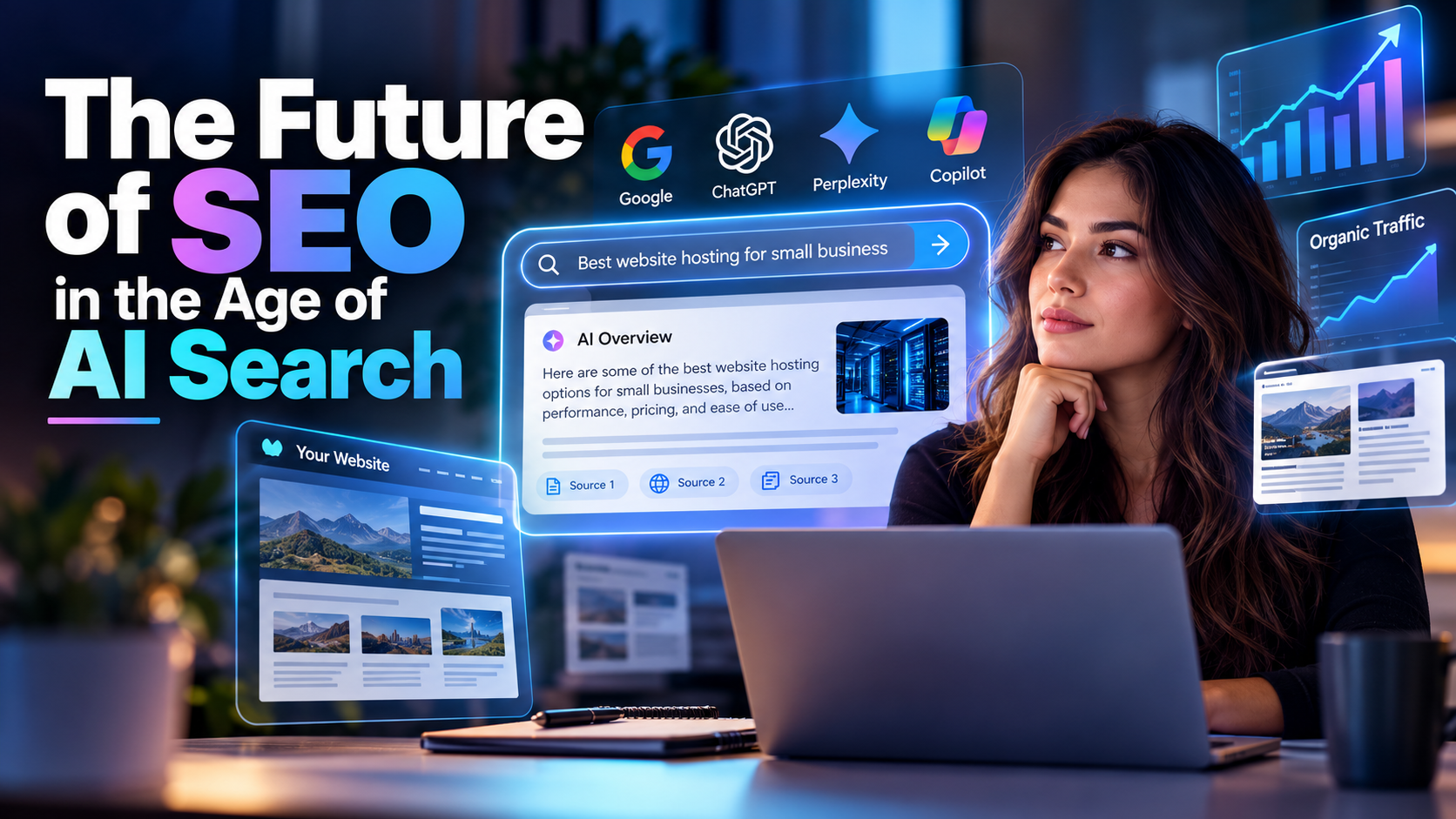
With platforms such as ChatGPT, Perplexity, and Google’s AI-powered search experiences, users no longer need to browse multiple websites to find answers. They can ask detailed questions and receive organized explanations, comparisons, and recommendations almost instantly.
For consumers, this represents convenience. For businesses that depend on organic traffic, it presents an entirely new challenge.
If artificial intelligence can answer questions without directing visitors to the websites that provide the underlying information, what happens to traditional SEO? And more importantly, how can businesses remain visible in an environment where search engines are becoming answer engines?
I believe the answer is not to abandon SEO, but to understand how it is evolving.
How Artificial Intelligence Is Changing Search Engine Optimization
Traditional SEO has always revolved around a relatively simple concept. When someone searches for information, a product, or a service, search engines identify relevant websites and display them in their results. Businesses compete for those positions because higher visibility generally creates more opportunities to attract customers.
Artificial intelligence is beginning to change that relationship.
Instead of presenting only a list of websites, AI-powered search can summarize information from multiple sources and deliver a direct answer. A person researching website hosting, marketing automation, or customer relationship management software may receive a detailed explanation without visiting several different pages.
This creates what marketers commonly call zero-click searches, where users obtain the information they need without opening another website.
The phenomenon is not entirely new, but AI-generated answers can expand its impact.
Research published by Pew Research Center in 2025 found that Google users clicked traditional search results less frequently when an AI summary appeared. In the browsing sessions studied, users clicked a traditional result in approximately 8% of visits with AI summaries, compared with 15% of visits without them.
Those numbers deserve attention, particularly from businesses that rely on educational articles and informational searches to attract visitors.
However, I don’t believe this means websites are becoming irrelevant.
People still need to compare products, evaluate companies, purchase services, and establish relationships with businesses. Artificial intelligence can help them research their options, but many commercial decisions still require visiting websites and interacting directly with providers.
What may change is the quality and intention of the traffic businesses receive.
Someone who previously visited five websites to understand a subject may now obtain that explanation from an AI assistant. But when that person is ready to purchase a product or hire a service, they may arrive with a clearer understanding of what they need.
This makes it increasingly important to focus on visitors who represent genuine business opportunities rather than simply pursuing traffic volume.
Another interesting development is the emergence of Generative Engine Optimization, commonly referred to as GEO.
The concept involves improving how information is presented so that AI-powered systems can discover, understand, and potentially reference it when generating answers.
Although GEO is still an evolving discipline, many of its underlying principles are familiar. Clear information, credible sources, well-organized content, and demonstrated expertise have always contributed to a stronger online presence.
The difference is that businesses must now consider how their information is interpreted by both traditional search engines and AI-powered assistants.
Why Quality Content and Human Experience Matter More Than Ever
One of the consequences of artificial intelligence is that creating content has become extraordinarily easy.
A business can generate dozens of articles, product descriptions, and marketing messages in a matter of minutes. What previously required considerable time can now be accomplished with relatively little effort.
But easier content production does not automatically mean better content.
In fact, I believe the abundance of AI-generated material is making authentic experience increasingly valuable.
Consider two websites publishing an article about digital marketing.
One provides generic advice about improving SEO, using social media, and creating engaging content. The other explains how a business approached those challenges, what strategies were tested, which mistakes were made, and what lessons emerged from the experience.
Both may contain useful information, but the second offers something more difficult to reproduce.
Perspective.
Throughout my professional life, I have learned that experience provides context that cannot always be captured through generalized explanations. Understanding why something worked, why another strategy failed, or how a particular decision affected a business can be more valuable than simply repeating established marketing advice.
This is one reason I encourage entrepreneurs to share what they actually know.

A website should not exist merely to publish keywords. It should demonstrate expertise, answer meaningful questions, and help visitors make informed decisions.
Google continues to emphasize useful, reliable, people-first content, and its guidance for AI search features reinforces the importance of established SEO practices.
Technical optimization still matters. Websites should load efficiently, work properly on mobile devices, provide clear navigation, and make important information accessible to search engines.
But technical improvements should support the content rather than replace its purpose.
For businesses operating in specialized industries, this creates an interesting opportunity.
A company serving medical practices can publish detailed explanations of the operational challenges those practices face. A software developer can document real implementations. An online retailer can provide product information that helps customers make better purchasing decisions.
The objective is to become a credible source within a particular field.
AI may change how people encounter that information, but credibility remains essential.
Building an Online Presence That Can Survive the AI Revolution
If there is one lesson I have learned from working with the internet for many years, it is that businesses should never depend entirely on a single source of traffic.
Search engines change their algorithms. Social networks modify their distribution systems. Advertising costs fluctuate. Technologies emerge and gradually replace familiar habits.
Businesses that rely exclusively on one platform are vulnerable to decisions they cannot control.
That is why I believe the future of SEO must be understood as part of a broader digital marketing strategy.
Your website should remain the foundation of your online presence, but it should work alongside social media, email marketing, paid advertising, useful content, and direct relationships with customers.
A visitor who discovers your business through Google today may become an email subscriber tomorrow and a customer several months later. Someone who encounters your brand through an AI-generated recommendation may later search for your company by name.
These interactions are connected, even when analytics platforms cannot perfectly attribute every step.
In my book Online Magic, I discuss the importance of understanding the different elements that contribute to online success. A website alone is rarely enough. It needs visibility, relevant content, effective communication, and a strategy for converting interest into meaningful results.
That principle becomes even more important as AI changes how information is discovered.
Businesses should also pay greater attention to brand recognition.
There is an enormous difference between someone searching for a general service and someone specifically looking for your company. The second person already has some awareness of your brand, which can reduce your dependence on competing for generic search terms.
Building that recognition requires consistency, credibility, and time.
Artificial intelligence can help with the process. It can assist with research, analyze website performance, identify content opportunities, and automate repetitive marketing activities.
However, I would caution against allowing automation to replace strategic thinking.
AI can help produce content, but it cannot guarantee that the content answers the right questions. It can analyze data, but someone still needs to understand what those numbers mean for the business.
The technology should improve our ability to make decisions rather than make us dependent on its recommendations.
I also believe marketers need to reconsider how they measure success.
For years, SEO reports have emphasized rankings, impressions, and organic traffic. These metrics remain useful, but they should not overshadow qualified leads, customer acquisition, sales, and long-term relationships.
A website receiving fewer visitors but generating more meaningful inquiries may be performing better commercially than one attracting thousands of people who never become customers.
Ultimately, the purpose of digital marketing is not simply to be seen.
It is to create opportunities.
Looking toward the future, I expect AI-powered search to become increasingly integrated into the way people research products, compare services, and make purchasing decisions. Some interactions will continue to take place through traditional websites, while others may happen within conversational interfaces and automated digital assistants.
No one can predict exactly how quickly these changes will unfold, but businesses do not need to wait for every detail to become clear before adapting.
They can begin by improving the quality of their content, strengthening their brands, maintaining technically sound websites, and developing relationships with audiences beyond search engines.
The future of SEO in the age of AI search is not about discovering a secret formula for appearing in artificial intelligence responses. It is about becoming the kind of business whose information deserves to be found, understood, and trusted.
After everything I have seen change on the internet, one principle remains remarkably consistent. Technology may transform how people discover businesses, but successful marketing still begins with understanding people.
Search engines will evolve, artificial intelligence will become more sophisticated, and the methods we use to reach customers will continue changing.
The businesses that succeed will be those willing to adapt without losing sight of what made the internet valuable in the first place.
The ability to connect people with information, solutions, and opportunities.
And that is a future worth preparing for.