
Artificial intelligence is no longer a laboratory experiment or a futuristic concept. It is infrastructure. It is integrated into search engines, financial systems, healthcare tools, marketing platforms, and communication networks. As AI systems expand their reach, the global conversation is shifting from excitement about capability to serious discussions about AI regulation, AI safety, and the long term issue of trust.
From my perspective as someone deeply involved in digital systems and AI automation, this shift is not only natural, it is necessary. When technology reaches a certain level of influence, governance becomes inevitable. The question is not whether artificial intelligence should be regulated. The question is how AI regulation can evolve in a way that protects society without suffocating innovation.
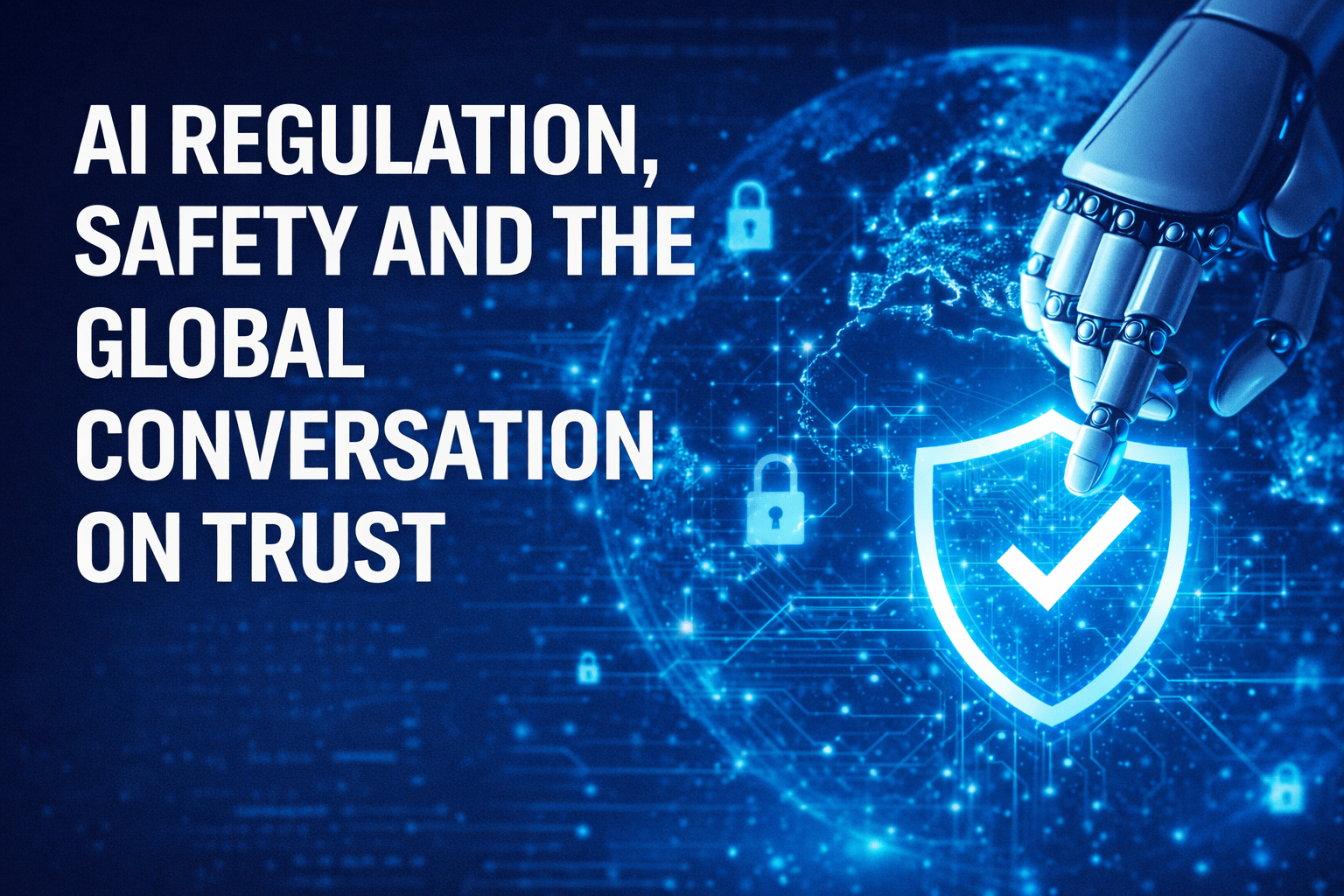
We are entering a phase where AI regulation, safety standards, and public trust will define the next decade of technological progress.
Why AI Regulation Is Becoming a Global Priority
The reason AI regulation has moved to the forefront is simple. Artificial intelligence is no longer confined to niche applications. It influences hiring decisions, credit scoring, medical diagnostics, content moderation, predictive policing, and national security. When systems operate at that scale, mistakes carry real consequences.
Governments across the world are responding. Some regions are proposing structured AI regulation frameworks that categorize AI systems by risk levels. High risk applications such as biometric surveillance or automated decision making in critical services face stricter oversight. Lower risk applications receive lighter supervision. This tiered approach reflects an understanding that not all AI systems carry equal impact.
The challenge lies in the speed of innovation. Artificial intelligence evolves faster than legislation. By the time a regulation is drafted, new models may already surpass the assumptions that law was built upon. This creates tension between regulators and developers. Businesses seek flexibility. Governments seek protection. Citizens seek reassurance.
AI regulation is becoming global because AI itself is global. A model trained in one country can affect users in another within seconds. Data crosses borders. Decisions ripple internationally. That interconnected reality forces policymakers to think beyond national frameworks and toward cooperative standards.
From a business standpoint, clarity in AI regulation is not an obstacle. It is stability. Clear rules reduce uncertainty. They allow companies to invest confidently, design responsibly, and scale sustainably.
AI Safety as the Foundation of Trust
If regulation provides structure, AI safety provides substance. Without safety, regulation becomes reactive rather than proactive.
AI safety is about more than preventing catastrophic scenarios. It includes reducing bias, protecting privacy, ensuring transparency, and maintaining human oversight. When an AI system makes a recommendation or decision, users deserve to understand the reasoning behind it.
One of the biggest trust gaps in artificial intelligence comes from opacity. Many advanced models operate as black boxes. They generate outputs without easily explainable internal logic. While the performance may be impressive, the lack of interpretability can erode confidence, especially in sensitive sectors like healthcare or finance.

As I observe the AI ecosystem, I see companies increasingly investing in explainability tools, audit logs, bias detection systems, and internal review processes. This is not just ethical positioning. It is strategic necessity. Customers are becoming more aware of data usage and algorithmic influence. They want transparency.
Trust grows when organizations communicate openly about limitations. No AI system is perfect. Acknowledging that reality strengthens credibility rather than weakening it.
Safety also requires continuous monitoring. Artificial intelligence systems learn from data. If the data shifts, outputs can shift. Without ongoing evaluation, unintended consequences can accumulate silently. Responsible AI deployment demands vigilance, not just launch day testing.
The companies that embed AI safety into their culture will be the ones that build lasting trust. Safety is not a feature. It is an operational mindset.
The Future of AI Regulation and the Global Trust Economy
The global conversation on AI regulation and trust is not only about compliance. It is about economic positioning.
Trust is becoming a competitive advantage. In a world where users can choose between multiple AI powered platforms, the differentiator is often perceived reliability. Businesses that demonstrate accountability attract partnerships. Governments that implement balanced frameworks attract investment. Developers who prioritize safety attract talent.
We are witnessing the early formation of what I would call a trust economy in artificial intelligence. Trust influences adoption rates. Adoption influences scale. Scale influences dominance.
At the same time, over-regulation carries risks. If AI regulation becomes excessively restrictive, innovation may migrate to more flexible environments. This is why balance is essential. Effective regulation should protect against harm while encouraging experimentation within defined boundaries.
International cooperation will likely shape the next stage of AI governance. Shared standards, interoperable frameworks, and cross border dialogue can prevent fragmentation. Artificial intelligence does not respect geographic lines. Regulation cannot remain isolated.
From my vantage point, the future will reward those who understand that trust is not an afterthought. It is the core infrastructure of AI growth.
Businesses that integrate artificial intelligence responsibly will build durable brands. Policymakers who craft thoughtful AI regulation will create environments where innovation and safety coexist. Developers who design with ethical foresight will shape technologies that enhance rather than undermine human potential.
Artificial intelligence is advancing rapidly. That acceleration makes AI regulation, AI safety, and global trust more urgent than ever. The goal is not to slow progress. The goal is to guide it intelligently.
As this conversation continues to evolve, one reality becomes clear. The future of artificial intelligence will not be defined solely by computational power. It will be defined by whether societies choose to align capability with responsibility.
And in that alignment, trust becomes the most valuable asset of all.